
Colon
The Latest
Diet-microbiome links drive IBD inflammation
-
by Doug Brunk
Advanced genetic testing of gut bacteria shows certain microbes and their byproducts may help lower inflammation in Crohn’s disease and ulcerative colitis.

Study: Income, BMI linked to CCE completion
-
by Doug Brunk
Danish screening data identify clinical and socioeconomic factors that significantly influence the likelihood of a complete colon capsule examination.

Inflammation severity at cancer diagnosis tied to outcomes in ulcerative colitis
-
by Sierra Rendon
Nationwide Japanese study finds colorectal cancers within UC-affected mucosa linked to lower recurrence-free and cancer-specific survival.

Advances in Crohn’s disease therapies show similar safety
-
by Doug Brunk
Large claims analysis finds no significant differences in serious infections, VTE, or MACE across biologics and JAK inhibitors.

Peripheral gaze guidance improves adenoma detection rate
-
by Doug Brunk
“Peripheral gaze guidance significantly improved adenoma detection — particularly for flat lesions — regardless of endoscopist experience level."

Surgical strategy for perianal Crohn's: Lessons from TOpCLASS
-
by Doug Brunk
MRI-guided staging helps reshape surgical decision-making.
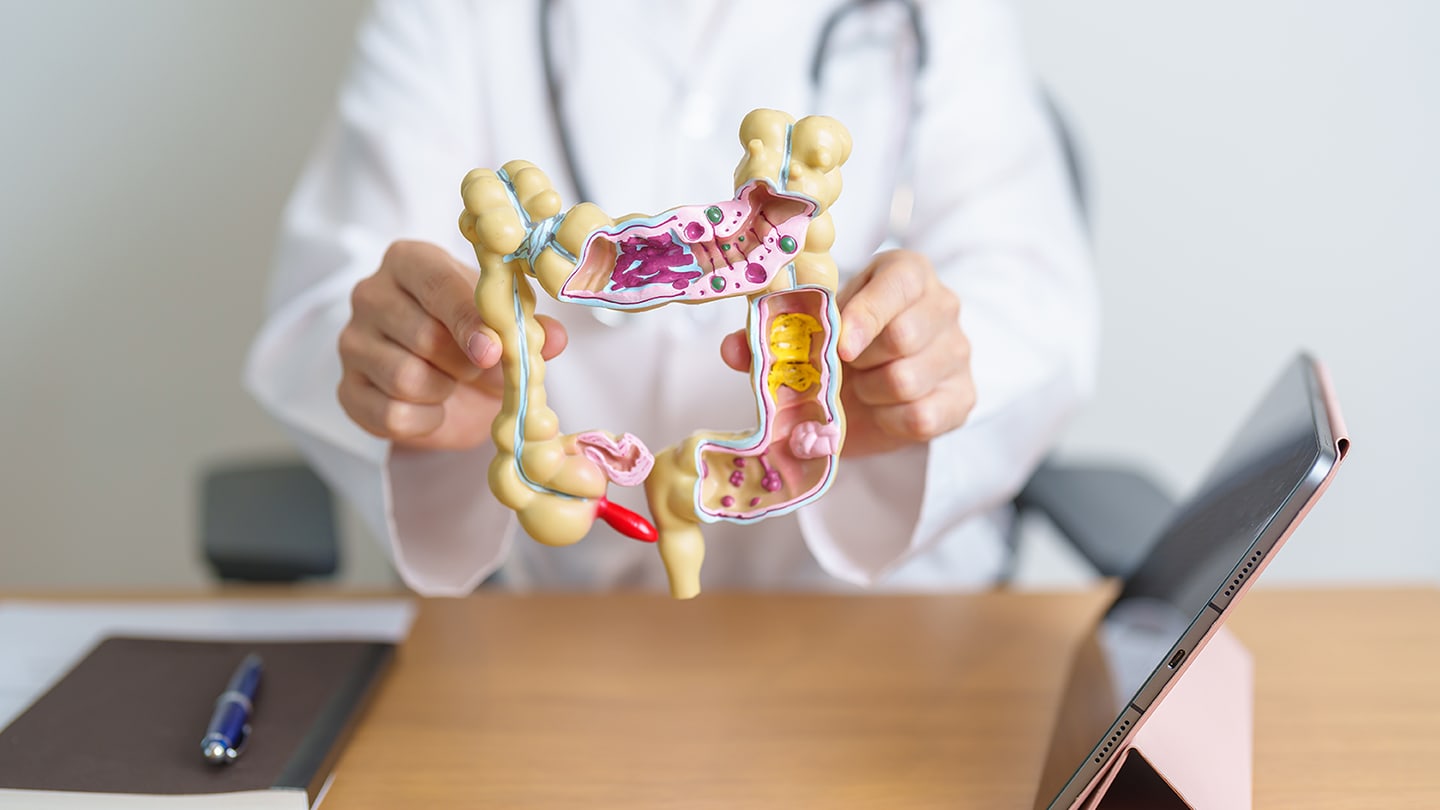
Genetic risk tied to IBD severity
-
by Doug Brunk
Large Danish cohort links higher polygenic risk scores to worse outcomes, including surgery and intensive treatment, with distinct patterns in Crohn’s disease and ulcerative colitis.

Creeping fat in Crohn's may turn harmful
-
by Doug Brunk
Even though it is common, the condition has not been studied much.
MRI-based standard may predict outcomes in perianal Crohn's
-
by Doug Brunk
The TopCLASS definition identifies healing based on three criteria.
Postoperative Crohn’s: What’s changed?
-
by Doug Brunk
The concept of reusing anti-TNF therapy after surgery is gaining traction.

Navigating primary sclerosing cholangitis: Diagnosis and the 5 pillars of management
-
by Judy A. Trieu, MD, MPH, Mahesh Krishna, MD, David N. Assis, MD
Primary sclerosing cholangitis remains a challenging disease to diagnose and manage, due to varying presentations, associated disease processes, and lack of targeted treatment.

With a little help from my friends: What gastrointestinal pathologists need to know from gastroenterologists
-
by Raul S. Gonzalez, MD
Why better communication between gastroenterologists and pathologists matters for patient care.

Green endoscopy: Practical strategies to reduce environmental impact in GI practice
-
by Rabia de Latour, MD
There are plenty of opportunities for gastroenterologists, ambulatory surgery centers, endoscopy units, and outpatient clinics to implement changes that reduce GHG emissions.

Realigning values
-
by Judy A. Trieu, MD, MPH
A thoughtful reset for early-career physicians navigating evolving goals and responsibilities.

Expert spotlights advances in ulcerative colitis treatment
-
by Doug Brunk
“Appendicectomy is a viable and safe strategy for reducing the relapse rate in patients with UC compared to standard medical therapy alone,” Dr. Kara De Felice said.

Hospital care for IBD gets practical refresh
-
by Doug Brunk
“IBD experts around the country are receiving many more calls from community gastroenterologists for advice treating their hospitalized patients,” Dr. Shirley Cohen-Mekelburg said.

New Crohn's data spotlight promising therapies
-
by Doug Brunk
Beyond drugs, interest is growing in diet-based treatments.
Tiny plastics may harm gut and liver health, review finds
-
by Doug Brunk
“Our aim was to start conversations between clinicians and their patients about this emerging risk,” Dr. Priyata Dutta explained.

Wearable devices show growing potential in IBD care
-
by Doug Brunk
"The use of wearables envisions a future where the assessment of disease activity would be ongoing, continuous, and free of clinical visits."

Upadacitinib in pediatric IBD: 52-week results
-
by Doug Brunk
Response in those with ulcerative colitis was especially strong.
FMT improves IBD remission, meta-analysis suggests
-
by Doug Brunk
Researchers evaluated 7 trials involving 542 patients with UC or CD.

GLP-1 therapy in Crohn's disease: Fewer steroids, hospitalizations
-
by Doug Brunk
“What stood out most was the consistent association between GLP-1 receptor agonist use and lower steroid dependence."

JAK inhibitors show superior real-world efficacy in microscopic colitis
-
by Doug Brunk
“These findings pave the way for dedicated prospective trials and highlight evolving therapeutic strategies."
Colorectal stenosis after ESD is common but treatable endoscopically
-
by Doug Brunk
The multicenter study analyzed data from 315 patients over a 6-year period.

Practice update: Refractory constipation
-
by Doug Brunk
Longstanding concerns about chronic stimulant laxative use are described as unfounded.

Infliximab levels predict ASUC outcomes
-
by Doug Brunk
Higher early clearance, especially by day 7, was strongly associated with nonresponse, treatment failure, and colectomy.

Task force touts greener endoscopy units
-
by Doug Brunk
Reducing unnecessary procedures, supplies, and ancillary resources offers the greatest environmental benefit relative to effort.

AGA strengthens payor ties to ease admin burden
-
by Doug Brunk
“We view this as an opportunity to work together to alleviate some of these burdens, and I will say that hearing the perspective from payors has been very eye-opening.”
Building effective community-based IBD care: Key challenges and opportunities
-
by Doug Brunk
“I fear practices will lose their relevance if they do not start building systems and processes for cognitive care pathways like IBD."
Mirikizumab shows promise for kids with ulcerative colitis
-
by Doug Brunk
"This is the first published clinical trial data on IL-23 inhibitors in children with UC and shows mirikizumab to be safe and effective for this population.”
AGA unveils new clinical practice guideline for Crohn's disease
-
by Doug Brunk
The guidelines are living documents that “will be updated quarterly, allowing for rapid evolution as new data become available.”

ED drugs tied to lower gastric cancer risk
-
by Kerri Miller
Large retrospective study finds 30% reduction in gastric malignancy among men taking erectile dysfunction medications.
Approach to weight management in GI practice
-
by Colleen R. Kelly, MD
As gastroenterologists, we treat a number of conditions that are caused or worsened by obesity.

Exercise patterns and GI cancer risk
-
by Kerri Miller
Consistently meeting—but not exceeding—recommended activity levels offers maximal protection against digestive cancers, new research suggests.

CRC screening: Smartphone-based stool test matches lab accuracy
-
by Amy Pfeiffer
The findings point to a new tool for enhancing participation in CRC screening programs—particularly among younger, tech-savvy patients under 60 years who demonstrated higher adoption rates.

Microbiome: COVID-19's hidden factor?
-
by Kerri Miller
Pre-pandemic microbiome composition influences severe disease outcomes years later in a population study.

Non-invasive blood and stool CRC screening tests: Available modalities and their clinical application
-
by Ekta Gupta, MD, Carol A. Burke, MD, Carole Macaron, MD
This review summarizes the test characteristics of stool and blood CRC screening options and provides guidance on clinical implications.
Mediterranean vs traditional diet for IBS
-
by Kathryn Wighton
The Mediterranean diet demonstrated greater symptom relief and patient adherence than traditional dietary advice.

Does ESD equal TAMIS for early rectal neoplasms?
-
by Amy Pfeiffer
“ESD was associated with fewer technical constraints, higher procedural success, shorter hospitalization, lower cost, and greater patient acceptance."
Lower GI mistakes: Postop Crohn's, vaccine gaps, colonoscopy errors
-
by Kerri Miller
"There's no such thing as a routine colonoscopy. Every colonoscopy has a potential for mistakes."
Endoscopist skill found to predict short-term post-colonoscopy cancer
-
by Julian Upton
In the short term, the quality of the endoscopist is a stronger driver of cancer risk than polyp characteristics.
Nutritional IBD screening tools ranked
-
by Kerri Miller
"MIRT might be the NSTs of choice to predict defined malnutrition and low-Fat Free Mass Index at 6 months follow-up in a cohort of inactive/mildly active IBD patients."

It’s not the polyp, it’s the provider: Study
-
by Julian Upton
High-risk polyps are usually considered the main reason for shortened surveillance intervals.
Letter: Another view on private equity in GI
-
by George Dickstein, MD, AGAF
Affiliating with a private equity-backed management services organization can empower physician practices to deliver high-quality care at a lower cost.
Global IBD trial experts agree on steroid standards
-
by Teraya Smith
New guidance issued on how steroids should be managed in clinical trial settings.
New York GI links health equity and CRC screening
-
by Jennifer Lubell
Dr. Pascale M. White makes it her personal mission to expand access to care and address health inequities.
Intestinal ultrasound offers prognostic value in IBD pregnancy
-
by Kerri Miller
"We rely very little on symptoms in pregnancy — they’re so unreliable — and instead target fecal calprotectin under 100 and sonographic remission."

On a quest to reduce stigmas about anal cancer
-
by Jennifer Lubell
Jessica Korman, MD, wants to erase what she says is a stigma in the gastroenterology profession surrounding anal disease.

Medical liability for the gastroenterologist
-
by Koushik Das, MD, AGAF
The definitions of malpractice, the most common reasons why a physician may get sued, the intended/unintended consequences of litigation, and the anatomy/timeline of a lawsuit.

Top 5 tips for becoming an effective gastroenterology consultant
-
by Allon Kahn, MD
Move beyond the notion of the “bad” or “soft” consult and seek instead to understand how you can help.
GLP-1 receptor agonist use in gastrointestinal endoscopy: A review of current evidence and guidelines
-
by Sitharthan Sekar, MD, Nikiya Asamoah, MD

Letter from the EIC: Vital partners in GI care
-
by Megan A. Adams, MD, JD, MSc
In this month’s issue of GIHN, we present the exciting results of the BOSS trial and more.

Improving care for patients from historically minoritized and marginalized communities with disorders of gut-brain interaction
-
by Rosa Yu, MD, Jennifer Dimino, MD, Christopher Velez, MD, GI and Hepatology News
An uncertain future for no-cost preventive care
-
by Megan A. Adams, MD, JD, MSc
Despite a new administration, the federal government continues to advocate for upholding the law, asserting that USPSTF members are “inferior officers."

Improving care for sexual and gender minority patients with disorders of gut-brain interaction
-
by Kara J. Jencks, MD, Christopher Velez, MD
Improving care for sexual and gender minority patients with disorders of gut-brain interaction
-
by Kara J. Jencks, MD, Christopher Velez, MD
Surgical vs endoscopic excision of large colon polyps
-
by Gyanprakash A. Ketwaroo, MD, MSc, Moamen Gabr MD MSc, Jeffrey D. Mosko, MD, MSc, Ira Leeds, MD

Clinical research in early career academic medicine
-
by Lauren D. Feld, MD, Kathy Nguyen, Katherine Cooper, MD, Loren Galler Rabinowitz, MD, Amiko M. Uchida, MD
Avoid getting stuck: A practical guide to managing chronic constipation
-
by Hamza Salim, DO, Anni Chowdhury, DO, Lavanya Viswanathan, MD, MS
Avoid getting stuck: A practical guide to managing chronic constipation
-
by Hamza Salim, DO, Anni Chowdhury, DO, Lavanya Viswanathan, MD, MS
The complexity of this condition should be appreciated and understood in order for a complete and thorough evaluation.
Healthcare AI: Balancing safety and innovation
-
by Megan A. Adams, MD, JD, MSc
In this month’s issue of GI & Hepatology News, we summarize a recent systematic review and meta-analysis highlighting worsening health disparities for Hispanic adults with MASLD.

Computational pathology offers insights on colorectal cancer outcomes
-
by Noah Levine
Study uses artificial intelligence to decode spatial cellular patterns in colorectal cancer, offering new tools for personalized treatment.
A paradigm shift in evaluating and investigating the etiology of bloating
-
by Rajan Singh, PhD, Baharak Moshiree, MD, AGAF
Navigating and negotiating maternity/paternity leave in private practice
-
by GI and Hepatology News
The AGA Future Leaders Program: a mentee-mentor triad perspective
-
by Parakkal Deepak, MBBS, MS, Edward L. Barnes, MD, MPH, Aasma Shaukat, MD, MPH
A simplified approach to pelvic floor dysfunction
-
by Ayesha Khan, DO, Raakhi Menon, DO, Lindsay Allen, PT, DPT, MBA, Brooke Corning, MD
Achieving promotion for junior faculty in academic medicine: An interview with experts
-
by Vineet S. Rolston, MD, Sophie Balzora, MD, Mark A. Schattner, MD
What gastroenterologists need to know about the 2024 Medicare payment rules
-
by GI and Hepatology News
The good, bad, and ugly of direct-to-consumer advertising
-
by Sheldon Sloan, MD, David A. Drew, PhD
New and transitioning gastroenterologists face burnout too
-
by Corlan O. Eboh, MD, Victoria Jaeger, DO, Dawn M. Sears, MD, FACG
Florida GI gets candid about imposter syndrome, insurers, starting a GI fellowship
-
by Jennifer Lubell
"When the opportunity to start a fellowship program came, I was highly motivated to bring it to fruition.”

Surveillance colonoscopy: When and how to stop
-
by GI and Hepatology News
Drs. Petr Protiva and Mariam Naveed address this issue and provide differing perspectives on approaching surveillance colonoscopy in the elderly.

Increase in message volume begs the question: ‘Should we be compensated for our time?’
-
by Luis M. Nieto, MD, Jami Kinnucan, MD
From private practice to academic medicine: My journey and lessons learned
-
by Katie Hutchins, MD
Recruiting gastroenterology and hepatology fellows virtually - Should we continue after the pandemic?
-
by Lara Dakhoul, MD, Tiffany Rhoden, Virginia Clark, MD
Artificial intelligence applications in colonoscopy
-
by Eugenia N. Uche-Anya, MD, Tyler M. Berzin, MD
Immune checkpoint inhibitor–related gastrointestinal adverse events
-
by Joshua Kwon, MD, Paul T. Kröner, MD, MSc
Why I decided to get an MBA after becoming a private practice gastroenterologist
-
by Vasu Appalaneni, MD, MBA
Integrating intestinal ultrasound into inflammatory bowel disease training and practice in the United States
-
by Noa Krugliak Cleveland, MD, David T. Rubin, MD